
Chatbots
Website Chatbots That Actually Convert: A Blueprint for Service Businesses
Stop losing website visitors. Learn how to build AI chatbots that engage, qualify, and convert casual browsers into booked appointments.
The free 30-minute AI Operations Audit is a conversation about a normal week in your business and where the work piles up. We find the one change that would give you the most time back and send you a plain-English plan for it. No forms and no pitch.
Book a free AI audit
Patrick Gibbs
Website chatbots convert visitors into leads by providing real-time answers at the exact moment shoppers need help. Most service business websites convert only a small share of visitors without live help. A well-designed AI chatbot can lift engagement and recover revenue from visitors who currently leave without contacting you.
The Silent Exodus
Every day, potential customers visit your website. They browse your services, read your reviews, and check your pricing. And then they leave. Forever.
Most service business websites convert only a small share of visitors into leads. That means a lot of your traffic, and the ad spend that brought them there, goes to waste.
What if you could flip that script? What if instead of watching nearly every visitor leave, you captured the people who had real buying intent?
That’s the power of a well-designed AI chatbot. Our complete guide to automating lead capture covers how chatbots fit into a full intake-to-qualification workflow.
Why Most Chatbots Fail
You’ve probably encountered terrible chatbots:
- The ones that ask “How can I help you?” and then don’t understand your answer
- The rigid decision trees that force you through 5 menus before giving up
- The “live chat” that’s never actually live
- The bots that feel more like obstacles than assistants
These chatbots fail because they were built by developers who understood code but didn’t understand conversation or conversion.
The Conversion-Focused Chatbot Blueprint
Here’s how to build (or choose) a chatbot that actually drives business results:
1. Proactive Engagement (Not Passive Waiting)
Old Approach: Chat widget sits in the corner waiting for visitors to click it, and the vast majority never engage.
New Approach: AI proactively engages after visitor demonstrates interest:
- 30 seconds on pricing page → “Have questions about our rates?”
- Scrolled 75% of service page → “Want to see if we’re a fit for your project?”
- Return visitor → “Welcome back! Still thinking about that [service they viewed]?”
Result: materially higher engagement than a passive widget that waits to be clicked.
2. Value-First Conversation
Old Approach: “What can I help you with today?” (The visitor doesn’t know what you can help with yet.)
New Approach: Lead with value:
- “I can check our availability and give you an instant estimate. What type of project are you considering?”
- “Want to see if we service your area? Enter your ZIP code and I’ll check right now.”
- “I can answer questions about [specific service they were viewing]. What would you like to know?”
The Psychology: People engage when they perceive immediate value, not when they’re asked to do work.
3. Intelligent Qualification
Your chatbot should qualify visitors just like your best sales rep would:
The Qualification Flow:
- Service Type: “Are you looking for repair, replacement, or new installation?”
- Timeline: “When do you need this completed?”
- Property Type: “Is this for a home or commercial property?”
- Decision Maker: “Will you be the one making the final decision?”
- Contact Info: “What’s the best number to reach you?”
Each answer should trigger conditional logic:
- Emergency timeline → Immediate escalation to phone call
- Commercial property → Route to commercial sales team
- 6+ month timeline → Add to nurture sequence
4. Instant Gratification
Modern consumers expect instant results. Your chatbot should deliver:
- Instant Availability: “Yes! We have openings this Thursday at 2 PM or Friday at 10 AM. Which works better?”
- Instant Estimates: “Based on your square footage, most projects like this range from $X to $Y. Want a precise quote?”
- Instant Answers: Access to your complete knowledge base for immediate responses to common questions
5. Smooth Handoff to Humans
The chatbot’s job isn’t to close every deal, but to qualify and tee up hot leads for your team.
Perfect Handoff Protocol:
- AI qualifies the lead and determines high intent
- AI asks: “Would you like me to have our [specialist] call you in the next 15 minutes?”
- If yes, AI collects best number and any specific timing preferences
- AI immediately notifies your team via SMS/email/Slack with full conversation transcript
- AI sends lead to CRM with qualification data attached
- Your team calls within 15 minutes while the lead is still hot
The Anatomy of a High-Converting Chat Script
Here’s an example script for an HVAC company, designed to convert far better than a passive contact form:
[Visitor lands on AC Repair page, scrolls 60%]
Bot: “Looks like you might be dealing with an AC issue. I can check our emergency availability right now. Are you currently without cooling?”
[If Yes]
Bot: “That’s rough, especially in this heat. We have technicians available for emergency calls today. Is this for a home or business?”
[Home]
Bot: “Got it. And are you the homeowner? (We need the homeowner’s approval to dispatch a tech)”
[Yes]
Bot: “Perfect. What’s your ZIP code? I’ll confirm we service your area and show you available time slots.”
[ZIP entered]
Bot: “Great news: we’re in your area! We have openings today at 3 PM, 4:30 PM, or 6 PM. Which works best? Or if this is urgent, I can have someone call you in the next 5 minutes.”
[6 PM selected]
Bot: “You’re all set! I’ll need a couple details to book this:
- Your name
- Best phone number
- Any gate codes or special instructions for our tech”
[Info provided]
Bot: “Excellent! Here’s your confirmation: Date: Today at 6:00 PM Name: [Name] Phone: [Phone] Service: AC Repair Diagnostic
You’ll receive a text when your technician is on the way (usually 30 min before arrival). Is there anything else I can help with?”
Notice what this script accomplishes:
- Validates the problem (emergency vs. routine)
- Qualifies the lead (homeowner, location)
- Books the appointment (commitment secured)
- Sets expectations (notification process)
- Opens door for additional value (anything else?)
Multi-Channel Capture
The best chatbots do more than capture leads. They start ongoing conversations:
SMS Continuation
After booking: “Save this number! You can text us anytime for updates or questions about your appointment.”
Now you have their SMS consent for:
- Appointment reminders
- Technician arrival notifications
- Follow-up satisfaction surveys
- Future promotional messages
Email Nurture
If they’re not ready to book: “I’ll send you our [relevant] guide and follow up next week. What’s your email?”
Now they’re in your nurture sequence with valuable content that builds trust over time. Our guide on improving close rates with AI automation covers how to structure these follow-up sequences for maximum conversion.
Design That Converts
Visual Hierarchy
- Chat icon should contrast with your site colors (consider a cool, trust-building accent color that matches your brand)
- Proactive messages should appear prominently, not hide in corners
- Clear CTAs: “Get Instant Quote” beats “Chat with us”
Mobile Optimization
Check your own mobile traffic and test the chatbot on small screens. Regardless of traffic share, your chatbot must:
- Work flawlessly on small screens
- Not block critical content
- Support tap-friendly buttons (not just text input)
- Handle mobile keyboards gracefully
Speed Matters
- Chat widget should load in <1 second
- AI responses should feel instant (<500ms)
- Any delays should show typing indicators so visitors know something is happening
Measuring What Matters
Don’t just track “conversations.” Track business outcomes:
| Metric | Target | Why It Matters |
|---|---|---|
| Engagement Rate | Higher is better | % of visitors who interact with bot |
| Qualification Rate | Higher is better | % of conversations that collect key info |
| Conversion Rate | Higher is better | % of engaged visitors who book/convert |
| Response Time | Near-instant | Speed of AI reply |
| Handoff Rate | Lower is better | % that need human (lower = more efficient) |
| CSAT Score | Consistently high | Customer satisfaction with bot experience |
Advanced Tactics for Power Users
Exit-Intent Recovery
When visitor moves mouse toward close button: “Wait! Before you go, would a 10% discount code help with your decision?”
Captures a share of visitors who were about to leave forever.
Abandoned Cart for Services
Visitor started booking flow but didn’t complete: 30 minutes later: “You were scheduling [service] but didn’t finish. Need help or have questions?”
Recovers a meaningful share of abandoned bookings.
Smart Routing Based on Source
Google Ads visitors → Pricing-focused messaging Organic search visitors → Educational approach Social media visitors → Social proof emphasis Return visitors → “Welcome back” personalization
The Implementation Checklist
Week 1: Foundation
- Install chat widget on all pages
- Configure basic greeting and fallback responses
- Connect to CRM for lead logging
Week 2: Optimization
- Add proactive triggers based on page/behavior
- Build qualification flow with conditional logic
- Create handoff protocols to human team
Week 3: Integration
- Connect calendar for instant booking
- Set up SMS sequences for captured leads
- Add knowledge base for instant answers
Week 4: Advanced
- Implement exit-intent capture
- Build abandoned booking recovery
- Create segment-specific messaging
Ongoing: Optimization
- Weekly review of conversation transcripts
- Monthly A/B test of key messages
- Quarterly update of knowledge base
The Bottom Line
A well-designed AI chatbot isn’t a nice-to-have: it’s a competitive weapon. While your competitors are letting most website visitors leave without a conversation, you’ll be turning more of that traffic into qualified leads and booked appointments.
The businesses that master conversational AI will keep pulling ahead. Those that rely on contact forms and “call us” buttons will wonder why their competitors are growing so much faster.
Your website visitors are leaving right now. The only question is whether you’re going to do something about it. For the complete picture of what’s possible, our AI automation guide for small businesses covers chatbots alongside every other automation that drives revenue.
AI for customer service is the quickest win for most service businesses. See how chatbots handle common support questions, qualify leads, and book appointments without human involvement. Browse our AI customer service tools and industry guides to see what works in your vertical. Book a free consultation with Epiphany Dynamics to build a chatbot that fits your business.
Frequently Asked Questions
Q: What conversion rate can a service business website expect from an AI chatbot?
A well-designed AI chatbot typically lifts website conversion rates materially versus passive forms, with the size of the lift depending on offer, traffic quality, and how the bot is wired into the existing funnel. The biggest driver is proactive engagement: chatbots that trigger automatically based on visitor behavior (for example, time on a pricing page or scroll depth on a service page) tend to engage a meaningfully larger share of visitors than passive chat widgets waiting to be clicked.
Q: Why do most website chatbots fail to convert visitors?
Most chatbots fail because they were built by developers who understood code but not conversation. They lead with generic “How can I help you?” prompts, use rigid decision trees that frustrate users, and lack real value delivery. Converting chatbots lead with immediate value: instant availability checks, live estimates, or direct answers to the specific service page the visitor is reading.
Q: What information should an AI chatbot collect to qualify a home service lead?
An effective qualification flow captures five pieces of information: service type (repair, replacement, or new installation), timeline and urgency, property type (residential or commercial), decision-maker status, and contact information. Each answer should trigger conditional logic: emergency timelines escalate to immediate phone calls, while long-term projects route to nurture sequences.
Q: Can a website chatbot actually book appointments or does it just collect contact info?
Modern AI chatbots with calendar integration can book appointments in real time during the chat conversation, offering specific available time slots, confirming the booking, and sending SMS and email confirmations immediately. The customer completes the entire booking without leaving the chat or waiting for a callback, which is what turns an interested browser into a booked appointment instead of a lead lost to a callback queue.
Q: What is exit-intent capture and how effective is it for reducing website bounce rates?
Exit-intent capture triggers when the visitor’s cursor moves toward the browser’s close button, displaying a targeted offer before they leave, typically a discount code, free estimate, or compelling question. This technique captures a portion of visitors who were about to leave permanently and converts some of them into leads that would have otherwise been lost entirely.
Patrick Gibbs
AI Automation Expert
Patrick Gibbs helps professional practices implement AI automation that captures more leads, books more appointments, and scales without adding overhead. He's the founder of Epiphany Dynamics and creator of the AI Front Desk system.
Related Solutions
Build this into a real workflow
Related Posts
Improving Close Rates with AI Automation: A Practical Guide
Most businesses lose deals not because their offer is weak but because they respond too slowly, follow up too little, and qualify too late.

AI Sales Automation Tools: What Actually Works in 2025
Sales reps spend only a fraction of their time actually selling. The rest is admin, research, and follow-up. AI sales automation tools are changing that math.
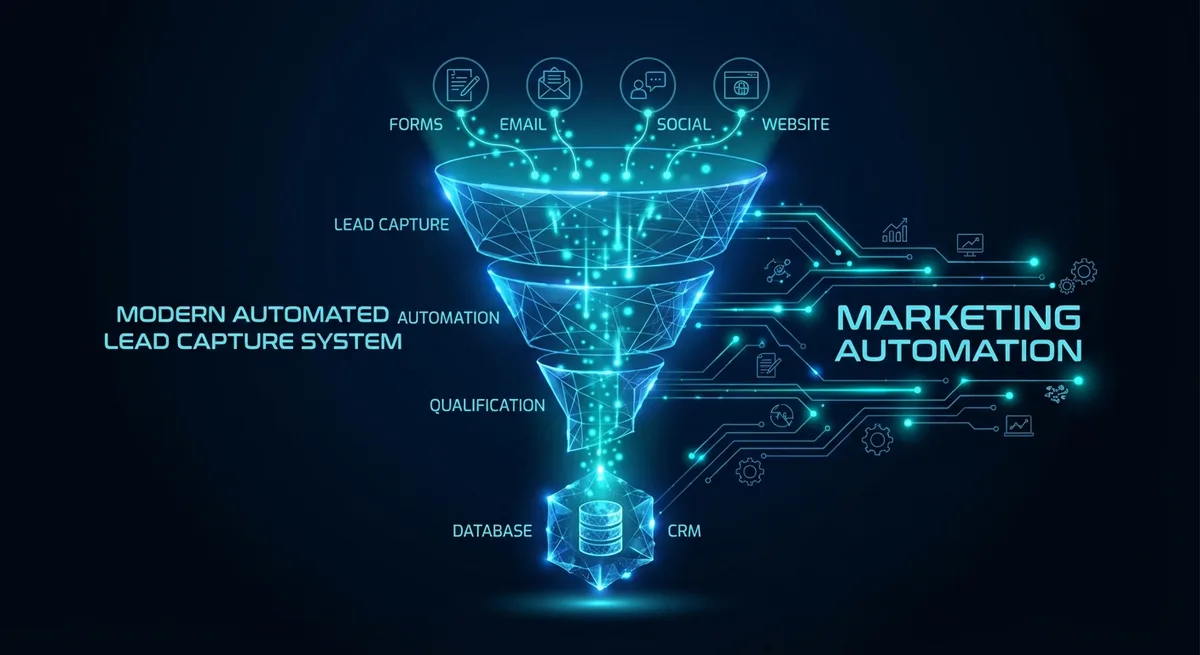
The Complete Guide to Automating Lead Capture in 2026
From website chatbots to SMS follow-up sequences, learn the automation strategies that are turning casual visitors into booked appointments on autopilot.